
Miami-Dade County · Broward County · Palm Beach County
Keep the building ahead of the breakdown.
Commercial HVAC maintenance organized around the equipment, operating demands, access requirements, and priorities of your facility—not a one-size-fits-all checklist.
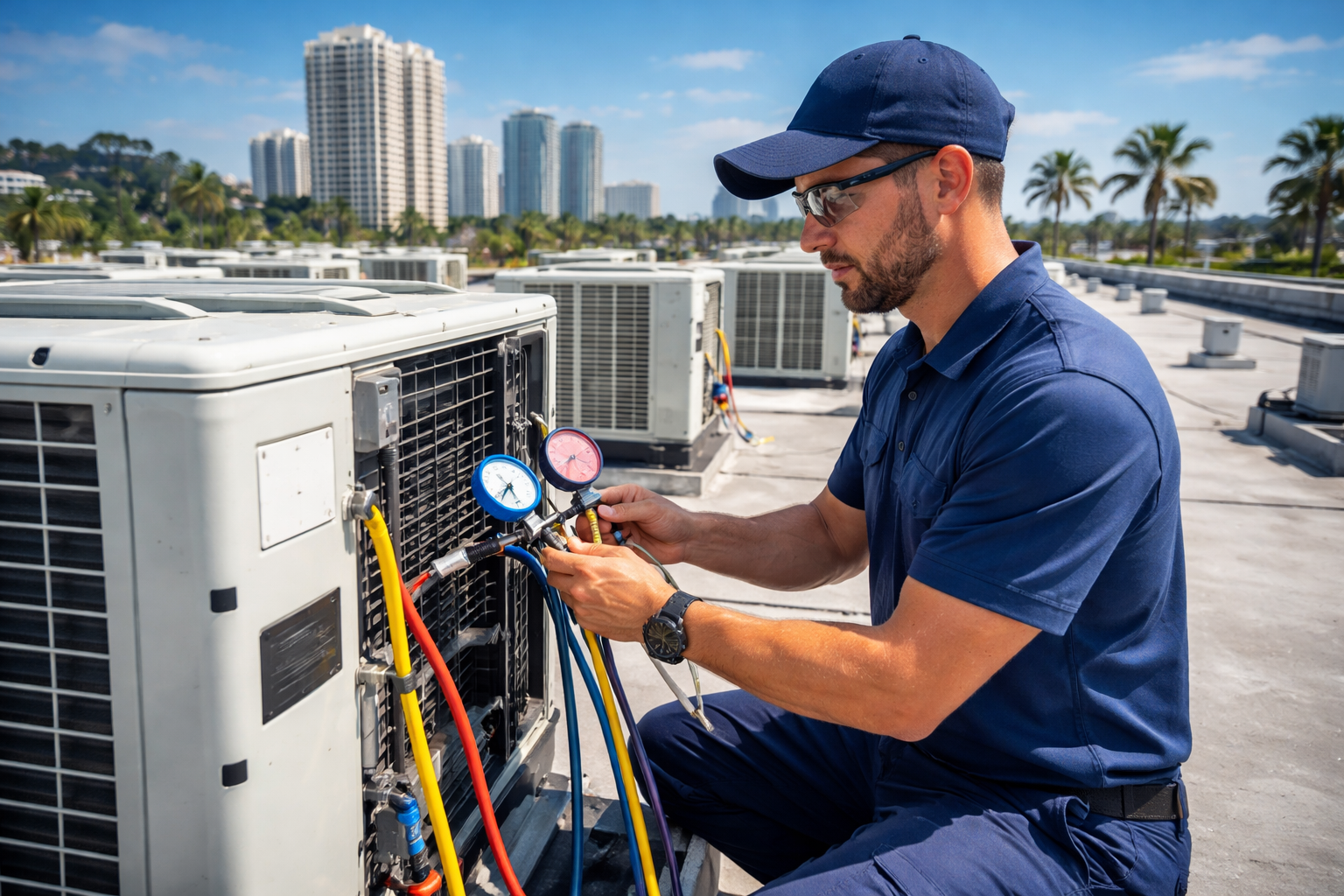
Facility-first planningEquipment inventory, service cadence, observations, and follow-up priorities.
The operating picture
A maintenance program starts with the asset list.
Commercial properties may combine multiple system types, tenant zones, control arrangements, and access conditions. The plan should identify what is being maintained before visit frequency and task scope are finalized.
Facility maintenance boardProgram framework
Equipment
Identify unit type, serving area, location, access, and known condition.
InventoryOperating demand
Consider occupied hours, internal loads, weather exposure, and critical areas.
ContextVisit cadence
Set service intervals according to the agreed equipment and facility needs.
ScheduleFollow-up
Communicate observed conditions, recommended repairs, and planning items.
PriorityScope note: Exact tasks and frequency depend on the maintenance agreement, equipment, access, and site conditions.
A repeatable operating rhythm
From baseline to the next visit.
Each cycle should leave the property team with a clearer understanding of what was reviewed, what changed, and what may need separate corrective work.
01
Baseline
Confirm the equipment list, service scope, access, and initial priorities.
02
Maintain
Perform the agreed recurring tasks and review accessible system conditions.
03
Communicate
Separate completed maintenance from observations and recommended repairs.
04
Plan
Use the findings to prepare follow-up work and the next scheduled visit.
Visit priorities
The right checks for the systems in front of us.
A commercial visit may address the following areas when they are included in the agreement and applicable to the equipment. The final task list is defined by system type and contract scope.
Airflow path
Filters, accessible coils, blower components, belts, and visible airflow restrictions as applicable.
Drainage
Accessible condensate components, drain condition, and signs of water-management concerns.
Electrical
Accessible electrical components, connections, controls, and observed operating condition.
Refrigeration
Operating observations and measurements appropriate to the equipment and visit scope.
Heating + ventilation
Applicable heat, make-up air, exhaust, and ventilation components included in the program.
Condition notes
Communicate visible wear, damage, access limitations, and items requiring separate repair.
Maintenance is not a guarantee against future failure. Repairs, replacement parts, code corrections, testing beyond the agreed scope, and inaccessible components are separate unless specifically included.
Systems in the program
One facility can hold many equipment types.
We organize the maintenance conversation around the actual system roster and the work each asset performs for the property.
Maintenance is also coordination
Support the equipment and the people operating the property.
Plan access before the visit.
Coordinate roof, mechanical-room, tenant-space, gate, parking, and escort requirements so technicians can reach the equipment included in the visit.
Keep routine work separate from repair decisions.
Maintenance observations may reveal conditions that need additional diagnosis, parts, authorization, or a separate repair visit. Clear separation supports better planning.
Program questions
Build the right scope.
Share the property type, equipment count, known system types, operating hours, and access requirements when requesting a plan.
How often should commercial HVAC equipment be maintained?
The appropriate cadence depends on equipment type, manufacturer guidance, operating hours, environmental conditions, facility use, and the agreed maintenance scope. We can discuss a schedule after reviewing the property’s systems.
Does maintenance include every repair that is found?
Not automatically. Routine maintenance and corrective repair are separate unless the agreement says otherwise. Observed issues may require diagnosis, parts, authorization, or a separate visit.
Can one plan include different types of equipment?
Yes, when those systems fall within Imperial Mechanical’s service capabilities and are identified in the agreement. The equipment list helps define tasks and visit planning for each asset type.
Can service be coordinated around business operations?
Tell us about occupied hours, access windows, escorts, tenant coordination, and critical areas. Scheduling depends on availability and the site’s requirements, but those details should be part of the plan.
Miami-Dade County · Broward County · Palm Beach County
Put the equipment list to work.
Tell us about the property, equipment types and approximate count, operating schedule, access requirements, and current maintenance needs. The secure request form continues directly below.